Uray
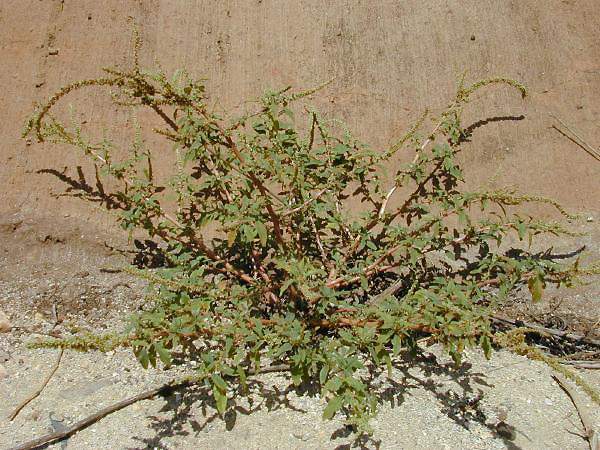
Amaranthus spinosus · Spiny amaranth
- Names in the 1901 book
- Kilitis, Orayi, Tag.; Ayantoto, Pam.; Kalitis, Tilites, Bayag̃-bayag̃, Vis.; Kuanton, Iloc.; Thorny Amaranth, Eng.
- Names in the 1985 book
- English: Amaranthus; Tagalog: Kulitis; Ilocano: Kalunay
- Colours
- flowergreen
- Native range
- Tropical Americas
- In the Philippines, per the book
- Common in all parts. Blooms in October.
- Family
- Amaranthaceae, filed in the book under Amaranthaceæ
- Printed in 1901 as
- Amaranthus spinosus, L.
- Printed in 1985 as
- Amaranthus spinosus L.
- Sources
- Page 200 on Project Gutenberg · Healing Wonders of Herbs (1985), page 103 · Wikipedia
The plant today
Amaranthus spinosus, commonly known as the spiny amaranth, spiny pigweed, prickly amaranth or thorny amaranth, is a plant native to the tropical Americas. Spread worldwide as a weed, it is an aggressive invasive species toxic to livestock. It is a serious weed interfering with rice cultivation in Asia.
Excerpt from “Amaranthus spinosus” on Wikipedia, CC BY-SA 4.0.
Recorded in the Philippines
GBIF holds 102 records of this plant from the Philippines. The ones with map coordinates fall in 9 provinces, most often Agusan del Sur (17), Zamboanga del Norte (7), Davao Oriental (2), Davao del Norte (1), Davao del Sur (1), Isabela (1), Metropolitan Manila (1), Oriental Mindoro (1), and 1 more.
Counts from GBIF occurrence records, October 2026. They include planted trees and garden plants, and a province with no records may only lack collectors.
What the 1901 book says
A historical record, quoted as printed. Doses and remedies here are not medical advice.
Uses
The entire plant is emollient and its principal use is as a poultice for inflammations, bruises, etc. The decoction of the root is diuretic and antiphlogistic and is used in Mauritius (30 grams root to 750 cc. water) as an internal remedy for gonorrhœa; indeed it is there regarded as a specific for that disease, checking the discharge and the “ardor urinæ.” It should be continued till the cure is complete.
The bruised leaves are used locally for eczema.
Botanical description
A plant 2–3° high of a reddish color. Leaves alternate, lanceolate, broad, notched at the apex, wavy, glabrous. Petioles with a pair of spines in their axils. Flowers small, yellow-green, in round axillary clusters and in long terminal spikes. The pistillate flowers are sometimes separated from the staminate, sometimes mixed with them in the lower part of the spike. Staminate: No corolla, calyx 2–5 parts, stamens 4–5. Pistillate: Style and stigma 2 or 3, otherwise the same as the staminate. Seed vessel with 1 seed.
What the 1985 book uses it for
A record of home remedies from 1985, with the book's amounts and doses reworded. It is not medical advice.
- AsthmaDecoction of young stems, leaves and flowers, drunk.Boil 5 chopped young stems, with their leaves and flowers, in 5 glasses of water for 10 minutes. Adults take 1 cup four times a day. Children half a cup, babies 2 teaspoons, four times a day.Page 14
- EczemaLeaf decoction as a hot compress.Boil 3 cups of chopped fresh leaves in 5 glasses of water for 15 minutes. Hold a towel soaked in it on the patch for 30 minutes.Page 23
Summarised from Herminia de Guzman-Ladion, Healing Wonders of Herbs (Manila: Philippine Publishing House, 1985), where this plant is shown as “Kulitis” on page 103. The book is in copyright, so its wording and photographs are not reproduced. Amounts are the book's, restated.
Recent research
The most cited papers since 2022 that name this plant in the title, pulled from Europe PMC in October 2026. Titles are the authors' own and the findings have not been reviewed here.
- The Invasive Plant Amaranthus spinosus L. Exhibits a Stronger Resistance to Drought than the Native Plant A. tricolor L. under Co-Cultivation Conditions When Treated with Light Drought
- Nutritional aspects of non-conventional edible plants from Brazil: Caruru (Amaranthus spinosus L) and trapoeraba (Commelina benghalensis)
- Amaranthus spinosus Linn. Extract as an Innovative Strategy to Regulate Biomarkers for Ovarian Hyperthecosis via Circular RNA (hsa-circ-0001577): Evidence From Biochemical, Metabolomics, Histological, and Phytochemical Profiling